Keynote speakers




Enhancing TRE Capabilities to Support Federation and AI Projects: A UK Perspective
Professor Emily Jefferson is Director of DARE UK and Strategic Advisor (Technology) at Health Data Research UK (HDR UK), as well as Professor of Health Data Science. Both DARE UK and HDR UK play leading roles in developing Trusted Research Environment (TRE) standards and advancing interoperability to enable federated research at scale.
Emily’s research focuses on innovative approaches for delivering secure, linked sensitive data rapidly and at scale—ensuring robust data governance while meeting the evolving needs of the research community.
She holds a degree in Biochemistry and a PhD in Bioinformatics and worked as a postdoctoral researcher in Bioinformatics following her doctorate. Her career spans academia and industry and includes leading a regional TRE for over a decade prior to joining HDR UK. Along the way, she also completed a cycle journey from New Zealand to the UK.
Current affiliation
DARE UK Director (UKRI secondment), Strategic Advisor (Technology) Health Data Research (HDR) UK, Professor of Health Data Science University of Dundee
Trusted Research Environments (TREs)—also known as Secure Data Environments or Safe Havens—are secure computing infrastructures that enable the analysis of sensitive data (e.g. health, administrative, genomic, and financial data) without that data leaving the secure environment. They operate in accordance with the Five Safes principles.
More than 60 TREs are currently operating across the UK, collectively supporting around 10,000 research projects. However, by design, TREs can create secure data silos, making it challenging to link and query data across different environments. In addition, supporting artificial intelligence (AI) projects within TREs presents technical, procedural, cultural, governance, and regulatory challenges.
This talk will provide an overview of the UK TRE landscape and its relationship to developments across Europe. It will highlight the work of DARE UK and HDR UK in convening the UK TRE ecosystem to develop standardised, interoperable models of federation. The session will also explore ongoing efforts to address the specific challenges of enabling AI research securely within TREs.
Governing federated multi-country observational research: lessons for an extensive reuse of sensitive multimodal data
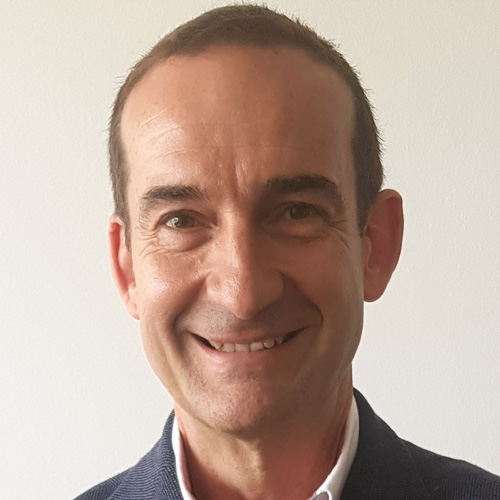
Enrique Bernal-Delgado MD PhD, holds a Master’s degree in Public Health and another in Health Economics. After a period as a visiting scholar at The Dartmouth Institute (Dartmouth Medical School, New Hampshire, USA), he founded the research group ‘Data Science for Health Services and Policy’ at the Aragon Health Sciences Institute (IACS). He is currently an elected member of the Board of Directors of the European Open Science Cloud. His scientific career encompasses data-driven research on health services and policies, the creation of research infrastructures for the mobilisation of real-world health data. Since 2020, he has been contributing to the construction of the European Health Data Space for secondary use.
Affiliation
Senior Scientist at the Institute for Health Sciences in Aragon
Our research often requires pseudonymised, multimodal, and longitudinal individual data linked from multiple sources stored in multiple locations. Generally, our research requires a large amount of data representing the universe of potential observations. In some cases, the large amount of data and its dimensionality may require computational partitioning. These are the usual arguments supporting the need for a federated approach; however, intrinsic to the federated approach is the need to address a number of legal, organisational, semantic and technological challenges. Based on several exemplary case studies, we will discuss how to overcome these challenges while complying with the new European Health Data Space regulation for secondary use and the principles of Open Science.
Artificial Intelligence and the global research data community: a perfect pairing?
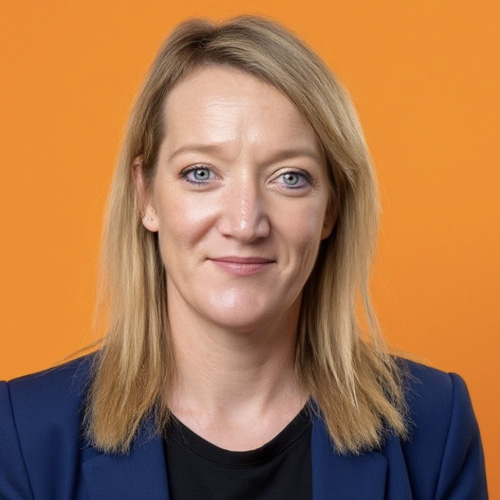
Hilary Hanahoe serves as Secretary General of the Research Data Alliance (RDA), where she leads a vibrant global community of over 16,000 individual members spanning 151 countries. In this role, she provides strategic leadership for RDA’s membership whilst serving as CEO of the RDA Foundation, the organisation’s legal entity. Her responsibilities encompass the effective management of RDA operations, fostering relationships with funders and key stakeholders, and ensuring the long-term financial and organisational sustainability of this international initiative. At the heart of her work lies a commitment to stewarding RDA’s dynamic, high-impact community of volunteers who are dedicated to enabling open data sharing and reuse across the globe. Hilary brings genuine passion to championing the Research Data Alliance’s mission and supporting its collaborative community in breaking down barriers to global data accessibility.
Affiliation
Secretary General, Research Data Alliance
Since 2025, the Research Data Alliance (RDA), in collaboration with Microsoft, has been conducting a global community consultation to explore how researchers are currently using agentic AI — defined as AI systems capable of autonomous operation with minimal human oversight — and to assess its value across the research lifecycle.
Grounded in the FAIR and CARE principles, the consultation was open to all, regardless of AI expertise or location, and built upon earlier RDA-Microsoft work that had identified automated data preparation as a critical researcher need.
Participants evaluated eleven proposed agentic AI tools spanning the full research lifecycle, from planning and funding through to publication and impact reporting. Three emerged as clear community priorities: the Literature Librarian, supporting natural language literature searches integrated with library subscriptions; the Data Director, assisting with FAIR-compliant data preparation and sharing; and the Funding Finder, helping researchers identify relevant opportunities and navigate application processes. These rankings were consistent across both regional and stakeholder analyses.
Beyond preferences, respondents also shared insights on desirable tool features and anticipated challenges. The presentation will summarise the consultation findings and provide an update on developing a blueprint for global community use of one of the top three ranked tools.

Repositories as Infrastructure for Machine Reasoning
Ian Foster is Senior Scientist and Distinguished Fellow, and director of the Data Science and Learning Division, at Argonne National Laboratory, and the Arthur Holly Compton Distinguished Service Professor of Computer Science at the University of Chicago. He has a BSc degree from the University of Canterbury, New Zealand, and a PhD from Imperial College, United Kingdom, both in computer science. His research is in distributed, parallel, and data-intensive computing technologies, and their applications to scientific problems. He is a fellow of the AAAS, ACM, BCS, and IEEE, and has received the BCS Lovelace Medal; IEEE Babbage, Goode, and Kanai awards; and ACM/IEEE Ken Kennedy award.
Research data repositories were built for preservation and human reuse. Increasingly, however, their primary consumers will be AI systems—agents that integrate data at scale and drive downstream computation across institutional boundaries. Control over scientific reasoning will follow the infrastructure that enables this integration. If repositories remain optimized for download and documentation, proprietary AI platforms will absorb public data and expose reasoning through closed systems. Retaining public control requires repositories to interoperate at the level of semantics and execution, supporting policy-bound computation, machine-readable usage constraints, and verifiable provenance across institutions. In doing so, they become not merely archives, but a federated substrate for machine-mediated scientific reasoning.
Four waves of development in Citizen Science: a global to local view of a field in motion
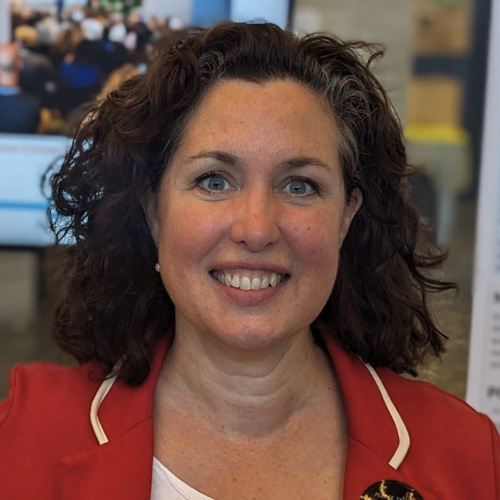
Margaret Gold is a Senior Researcher at Leiden University and the Coordinator of the Citizen Science Lab, a transdisciplinary knowledge hub and project incubator that brings together scientists, policy makers, citizens and other societal stakeholders in participatory research initiatives that produce new knowledge, address scientific questions of relevance to society, and provide data and insights on urgent societal issues that need to be tackled together.
Margaret’s main research focus is on Citizen Observatories (community-based environmental monitoring initiatives) and their impact on policy formation, environmental governance, social innovation, and collective action. In addition to running the Citizen Science Lab, Margaret is also Network Coordinator of the national network for citizen science practitioners in the Netherlands – Citizen Science Nederland.
In this keynote talk, Margaret will open with a brief introduction to Citizen Science and what is particular about CS data, followed by an overview of a field in rapid development, from Global SDGs and national research policies to institutional Open Science programmes and grassroots collaborations with citizen and societal actors.

A connected and ethical AI-ready data ecosystem
Rosie Hicks is the Chief Executive of the Australian Research Data Commons (ARDC). Enabled by the Australian Government’s National Collaborative Research Infrastructure Strategy (NCRIS), ARDC provides Australian researchers with competitive advantage through data. ARDC’s mission is to accelerate research and innovation by driving excellence in the creation, analysis and retention of high-quality data assets.
Rosie has extensive knowledge of the Australian research infrastructure sector, with 20+ years building national capabilities that transform scientific discovery. Her career, spanning Japan, UK and Australia, includes every aspect of scientific instrumentation from product development and technical marketing to the management of multi-user facilities, working in environments that cross academic and industry domains to drive innovation and research translation.
Affiliation
Chief Executive, Australian Research Data Commons (ARDC).
Capitalising on advances in AI/ML requires a connected, ethical and AI-ready data ecosystem that enables data access, interoperability and reuse at scale. Connectivity addresses the fragmented nature of Australia’s repository and data storage ecosystem, which makes it difficult for users to navigate, inefficient to implement FAIR and CARE, and impossible to scale data engineering services. Ethical considerations need to be encoded through provenance and cultural/intellectual property rights to ensure AI models respect researchers’ and First Nations’ rights, secure trust and address AI bias. These foundations enable the creation of trusted AI models and sensitive data assets that can be shared, analysed and reused with confidence.
This presentation will provide an overview of Australia’s current progress towards an AI-ready data ecosystem.
The Best of Times, and the Worst of Times? Data Access in the Age of Generative AI
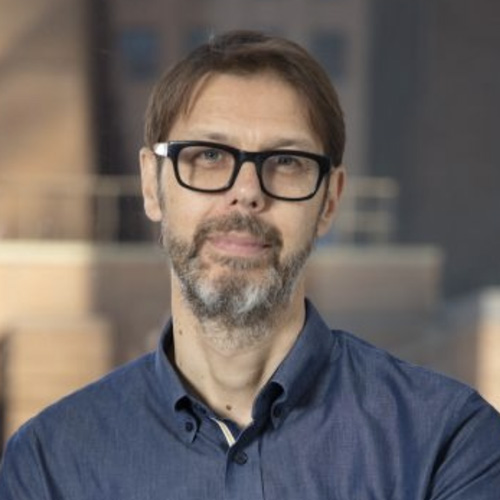
Dr. Stefaan G. Verhulst is an expert in using data and technology for social impact. He is the Co-Founder of several research organizations including the Governance Laboratory (GovLab) at New York University and The DataTank in Brussels where he serves in leadership positions. As a research professor at the Tandon School of Engineering of New York University, he focuses on using advances in science and technology, including data and artificial intelligence, to improve decision-making and problem-solving. He is also the Editor-in-Chief of the open-access journal Data & Policy and has served as a member of several expert groups on data and technology, including the High-Level Expert Group to the European Commission on Business-to-Government Data Sharing and the Expert Group to Eurostat on using Private Sector data for Official Statistics. Dr. Verhulst has been recognized as one of the 10 Most Influential Academics in Digital Government globally. He has published extensively on these topics, including several books, and has been invited to speak at international conferences, including TED and the UN World Data Forum. He is asked regularly to provide counsel on data stewardship to a variety of public and private organizations.
Affiliation
Co-Founder, The GovLab (New York)
Co-Founder, The Data Tank (Brussels)
Research Professor, Tandon School of Engineering, New York University
Editor in Chief, Data & Policy Journal (Cambridge University Press)
Co-Chair, Data for Policy Conference
In the age of generative AI, we are living through what Charles Dickens might call both “the best of times and the worst of times” (A Tale of Two Cites) for data: never has data re-use held such promise for addressing societal challenges yet never has access to that data felt so fragile. We are witnessing a growing “data winter,” marked by shrinking access to non-traditional data, the privatization of climate and other high-value research datasets, legal anxieties around AI training, and a slowdown in open government data – all which risk concentrating insight in the hands of a few. And yet, alongside this contraction, a spring of hope is emerging AI-enabled tools and interfaces, privacy-enhancing technologies, and new kinds of data commons are creating new pathways for responsible access and collaboration. The question before us is whether we allow extraction, weaponisations, fragmentation, and control to define the future of data, or whether we intentionally build a Fourth Wave of Open Data — one that is equitable, responsible and designed for meaningful reuse. The trajectory is not yet predetermined; it depends on the governance and investment choices we make today, and on whether we can turn the paradox of abundance without access into a new era of shared insight and collective progress.
CoProducing Data and Knowledge Through Citizen Social Science: Social Compromise with Communities and Civil Society Organisations
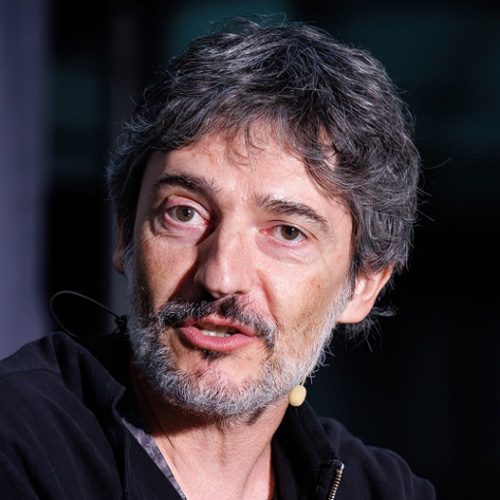
Josep Perelló is Professor of Physics at the University of Barcelona and is a researcher at the Universitat de Barcelona Institute of Complex Systems (UBICS). He leads OpenSystems, a research group pioneering participatory approaches in the computational social science and complex systems fields, mostly in urban contexts. His work develops coproduced research with communities to address socially relevant issues. In 2024, he was awarded the European Union Prize for Citizen Science (Digital Communities category) for the CoAct for Mental Health initiative. In 2025, OpenSystems, under his leadership, received the CHARMEU Open Science Recognition Award for its strong commitment to open, participatory research practices. Most recently, in 2025, Perelló was honored with the Premi Mercè Durfort in the first edition of the Premis de Ciència Oberta de Catalunya, recognizing his extensive trajectory promoting open science and democratizing knowledge production through multidisciplinary and communityengaged approaches.
Affiliation
OpenSystems, University of Barcelona and Universitat de Barcelona Institute of Complex Systems (UBICS)
Computational social science and complex systems research increasingly call for a commitment to align scientific inquiry with the needs, priorities, and values of the people and civil society organisations directly concerned with social and urban challenges. This talk presents how our group, OpenSystems at the Universitat de Barcelona, develops citizen science methodologies in which data is coproduced with communities—often in vulnerable situations—and civic actors, ensuring that research outcomes remain both scientifically robust and socially meaningful. Drawing from recent interdisciplinary work, I will describe cocreated initiatives on mental health, where shared data and narratives uncover multiple dimensions of community healthcare provision and social support networks, informing interventions developed together with civil society organisations. I will also present our thermal walks, where groups of citizens contribute experiential input and lowcost sensor data while exploring their neighbourhoods, helping guide climate adaptation efforts in collaboration with local civil society organisations. Additionally, research on walkability shows how integrating movement traces, embodied experience, and civic dialogue reveals new insights into urban accessibility and community placemaking. Across these examples, I will emphasize how citizen social science produces knowledge capable of informing public debate and institutional decisionmaking.
Organized by